


cljili | Exploring the Fascinating World of Strategy Games: The Role of 'cljili' in Modern Gaming
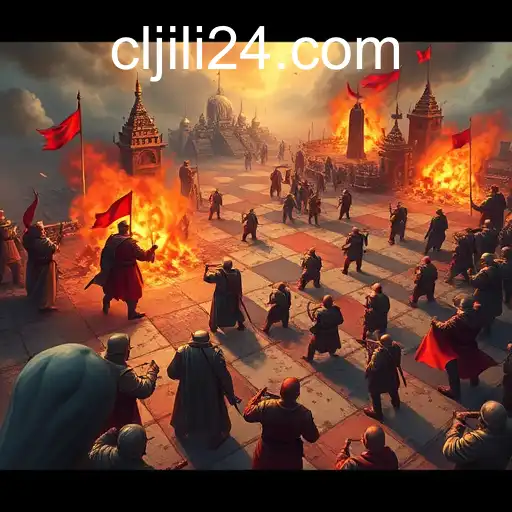
Strategy games have been a cornerstone in the gaming landscape, challenging players with their intricate designs and demanding foresight. Known for developing strategic thinking and problem-solving skills, these games have an enduring appeal across generations. Within this category, the term 'cljili' has emerged as a unique aspect, representing a broader theme or concept in modern gaming culture.
At their core, strategy games engage players by requiring them to develop and execute plans to achieve victory, often through resource management, tactical maneuvers, and complex decision-making processes. These games span a wide range of settings—from historical battles in games like 'Total War' to fantasy realms where players control mythical creatures or armies.
The keyword 'cljili' symbolizes a thematic element found in modern strategy games, often associated with innovation and creativity in game design. It reflects a shift from traditional linear gameplay to more open-ended, adaptive environments where players tailor their approaches based on evolving scenarios.
Historically, strategy games have roots going back to ancient board games such as chess and Go, which test the strategic prowess of their players. In digital formats, strategy games have improved exponentially, offering complex storylines, real-time multiplayer competition, and realistic simulations.
An intriguing aspect of strategy games is their educational potential. They promote critical thinking and are used in educational settings to teach planning and resource management. Games like 'Civilization' and 'Age of Empires' serve as interactive historical lessons, immersing players in different eras and civilizations, and offering a hands-on understanding of historical progressions.
The role of 'cljili' within these games presents itself through diverse gameplay mechanics that encourage players to adapt new strategies and tackle challenges in innovative ways. By including elements that require players to reconsider and redevelop their strategies continually, these games increase their replay value and engage gamers in persistent mental exercise.
In the rising age of eSports, strategy games hold a prestigious position. Competitions centered around games like 'Starcraft' and 'Dota 2' showcase the intense tactical mastery and team coordination required to succeed at the highest levels of competition. These games have dedicated followings, with large community events and international tournaments attracting widespread viewership.
To conclude, strategy games stand as a testament to the enduring human love for tactical challenge and mental agility. The inclusion of innovative elements such as 'cljili' enriches this landscape, offering fresh avenues for exploration and mastery. As technology and creativity continue to evolve, the future of strategy games promises to be as captivating as their illustrious past.
